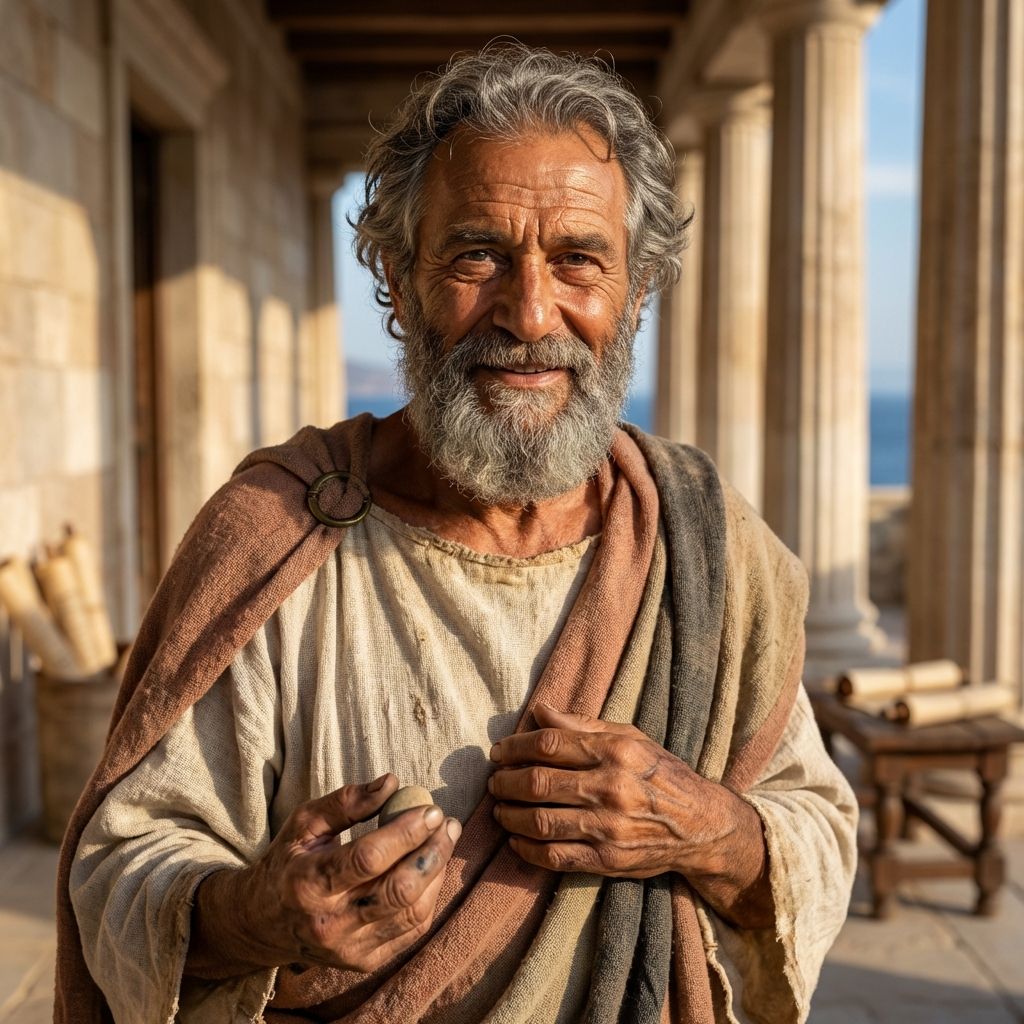
I am the wisest man alive, for I know one thing, and that is that I know nothing.
About This Quote
The sentiment is associated with Socrates’ response to the Delphic Oracle’s claim (reported by his associate Chaerephon) that no one was wiser than Socrates. In Plato’s account, Socrates tests the oracle by questioning politicians, poets, and craftsmen reputed to be wise, discovering that many claim knowledge they cannot justify. He concludes that if he is “wiser,” it is only in recognizing the limits of his own understanding. This episode becomes central to Socrates’ self-description of his philosophical mission—public examination (elenchus) aimed at exposing false certainty and encouraging intellectual humility.
Interpretation
The quote expresses Socratic wisdom as epistemic humility: genuine wisdom begins with awareness of one’s ignorance. Rather than celebrating ignorance, it criticizes the pretense of knowledge—especially in moral and political matters—when one cannot give a coherent account. The stance underwrites the Socratic method: by admitting uncertainty, one remains open to inquiry, correction, and clearer definitions. Its significance lies in reframing “wisdom” from possessing many facts to maintaining a disciplined honesty about what one can and cannot claim to know, making self-knowledge and critical questioning the foundation of philosophy.
Source
Plato, Apology, 21d–23b (Socrates’ discussion of the Delphic oracle and his conclusion that his wisdom consists in not thinking he knows what he does not know).