Never give in, never give in, never, never, never, never—in nothing, great or small, large or petty—never give in except to convictions of honor and good sense.
About This Quote
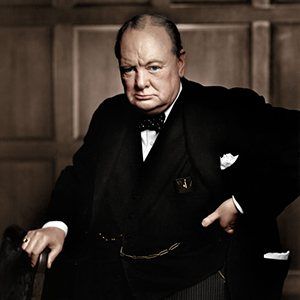
Churchill delivered this line in a speech to the boys of Harrow School in London during World War II, when Britain was enduring the strain of prolonged conflict and uncertainty. Speaking as Prime Minister, he framed the war as a test of national character and urged steadfastness in the face of setbacks. The address is commonly known as “Never Give In” and is dated 29 October 1941. Churchill’s repetition and rhythmic phrasing were designed for oral impact, turning a moral exhortation into a memorable maxim suited to a school setting while also resonating as wartime encouragement to the wider public.
Interpretation
The quote is an ethic of perseverance tempered by principle. Churchill’s insistence on “never give in” rejects defeatism and counsels endurance across all scales of difficulty (“great or small… large or petty”). Yet the final clause—yield only to “convictions of honor and good sense”—prevents stubbornness from becoming mere obstinacy. The ideal is resilience guided by judgment: one should not capitulate to fear, fatigue, or pressure, but one should revise course when conscience and rational assessment demand it. In wartime context, it elevates persistence into a civic virtue while acknowledging that moral and practical reasoning set legitimate limits.
Source
Winston S. Churchill, speech at Harrow School, London, 29 October 1941 (commonly titled “Never Give In”).