Now this is not the end. It is not even the beginning of the end. But it is, perhaps, the end of the beginning.
About This Quote
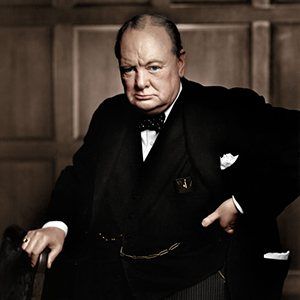
Churchill delivered this line during a speech in London on 10 November 1942, shortly after the Allied victory at the Second Battle of El Alamein in North Africa (Oct–Nov 1942). The win, led by General Bernard Montgomery’s Eighth Army, was widely seen as a turning point after years of setbacks and uncertainty for Britain and its allies. Speaking as Prime Minister in wartime, Churchill aimed to temper public euphoria while marking a genuine strategic shift: the Axis had been checked, but the larger war in Europe and the Pacific was far from decided. The phrase helped frame El Alamein as a pivotal milestone rather than a conclusion.
Interpretation
The sentence is a carefully calibrated piece of wartime rhetoric. Churchill rejects triumphalism (“not the end”) and even the comforting idea that victory is now inevitable (“not even the beginning of the end”). Yet he insists the moment matters: it is “the end of the beginning,” meaning the close of an initial, grueling phase defined by survival, improvisation, and defensive struggle. The formulation acknowledges progress without promising quick resolution, encouraging perseverance and strategic patience. Its enduring power lies in its paradoxical structure, which captures how historical turning points often feel—decisive in retrospect, but uncertain and incomplete when lived.
Variations
1) “This is not the end. It is not even the beginning of the end. But it is, perhaps, the end of the beginning.”
2) “Now this is not the end; it is not even the beginning of the end; but it is, perhaps, the end of the beginning.”
Source
Winston S. Churchill, speech at the Lord Mayor’s Luncheon, Mansion House, London, 10 November 1942 (often published under the title “The End of the Beginning”; later collected in Churchill’s wartime speeches/volumes).