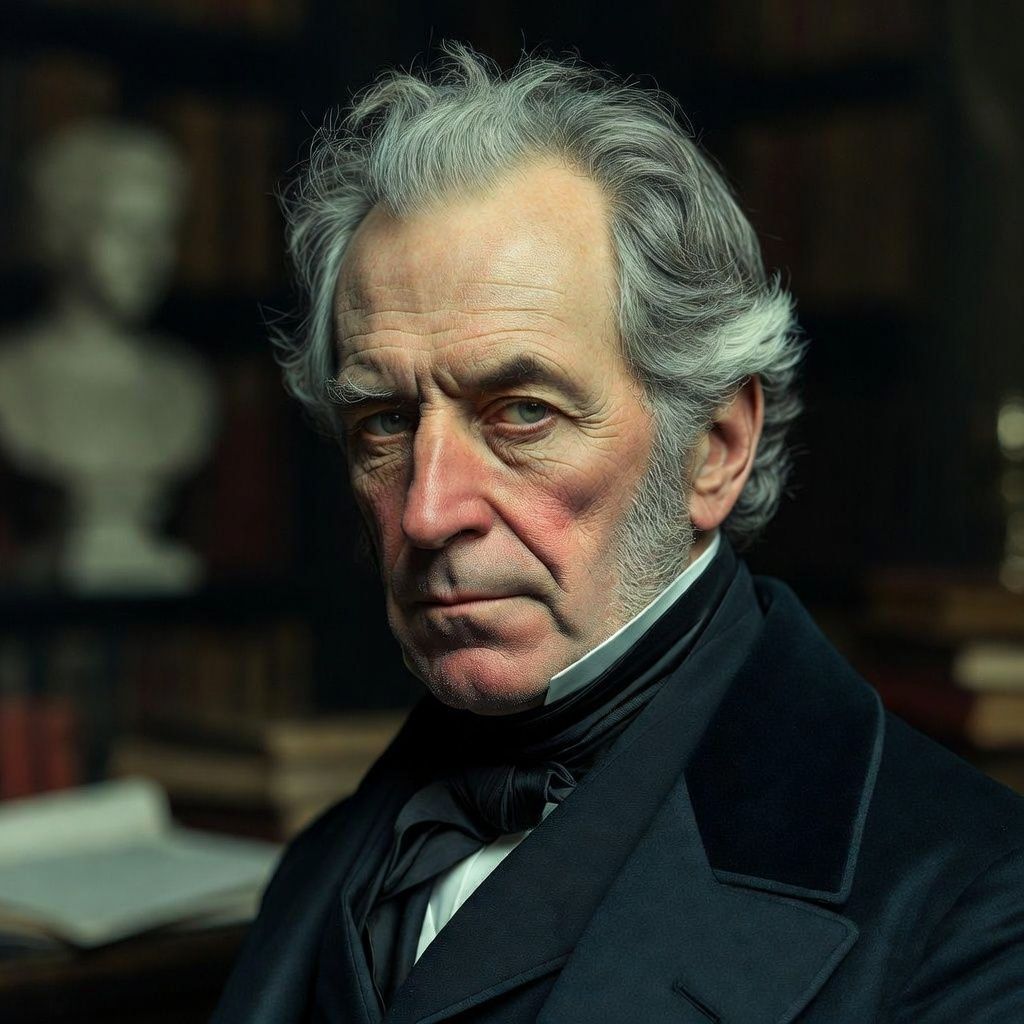
Myself when young did eagerly frequent
Doctor and Saint, and heard great argument
About it and about: but evermore
Came out by the same door wherein I went.
Doctor and Saint, and heard great argument
About it and about: but evermore
Came out by the same door wherein I went.
About This Quote

These lines come from Edward FitzGerald’s celebrated English rendering of the Persian poet Omar Khayyám, the Rubáiyát. In the poem’s reflective, skeptical voice, the speaker recalls his youth spent seeking answers from learned authorities (“Doctor”) and religious figures (“Saint”), listening to their debates about metaphysical and theological questions. Yet the search yields no decisive revelation: he leaves as he entered, still outside the mystery. The passage belongs to the Rubáiyát’s broader meditation on the limits of human knowledge, the futility of dogmatic disputation, and the turn toward lived experience in the face of ultimate uncertainty.
Interpretation
The speaker describes an earnest youthful pursuit of ultimate truth through scholarship and religion, only to find that argument does not deliver certainty. “Came out by the same door wherein I went” suggests that intellectual systems can become circular: one enters inquiry hoping for illumination, but exits with the same ignorance, merely having traversed competing explanations. In the Rubáiyát’s ethos, this disappointment underwrites a pragmatic, even hedonistic, philosophy—since final answers about existence, fate, or the afterlife remain inaccessible, one should be wary of doctrinal confidence and attend to the tangible present. The lines thus dramatize skepticism as a lived experience, not a mere abstract stance.