One child, one teacher, one book, and one pen can change the world.
About This Quote
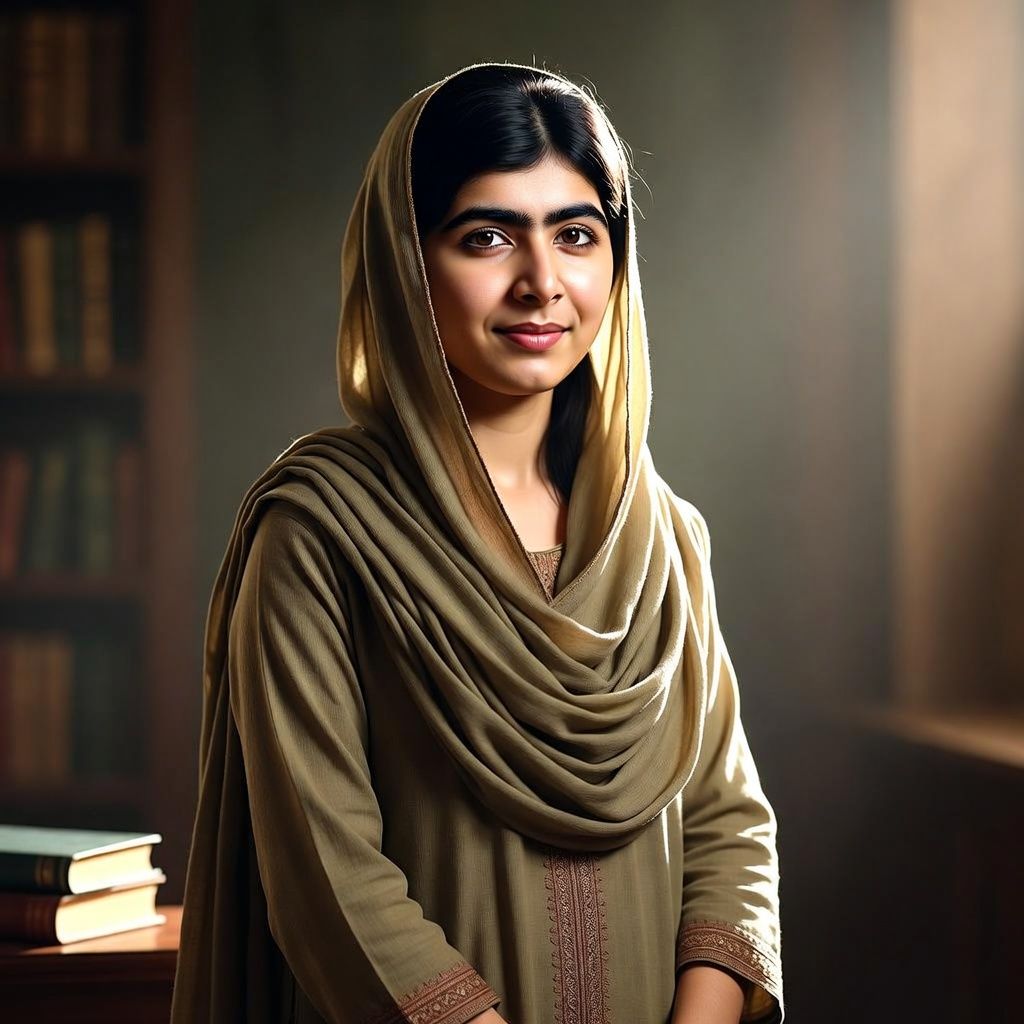
Malala Yousafzai used this line in her address to the United Nations Youth Assembly shortly after surviving the Taliban’s 2012 assassination attempt for advocating girls’ education in Pakistan’s Swat Valley. Speaking in New York on 12 July 2013—her 16th birthday, later marked as “Malala Day”—she framed education as a peaceful, universal tool against extremism and poverty. The speech called on world leaders to guarantee free, compulsory education for every child and emphasized that social change can begin with basic educational resources and the courage to use them.
Interpretation
The quote compresses Malala’s argument into a deliberately simple equation: individual agency plus access to education can produce outsized social transformation. By listing “one child, one teacher, one book, and one pen,” she highlights the minimum conditions for learning and empowerment—curiosity, guidance, knowledge, and the means to express and apply it. The repetition of “one” stresses that change does not require vast power or violence; it can start with a single educated person and ripple outward. The line also functions as a moral appeal, implying that denying education is not merely a policy failure but a theft of world-changing potential.
Variations
1) “One child, one teacher, one book and one pen can change the world.”
2) “One child, one teacher, one pen and one book can change the world.”
Source
Malala Yousafzai, address to the United Nations Youth Assembly, United Nations Headquarters, New York City, 12 July 2013 (“Malala Day” speech).